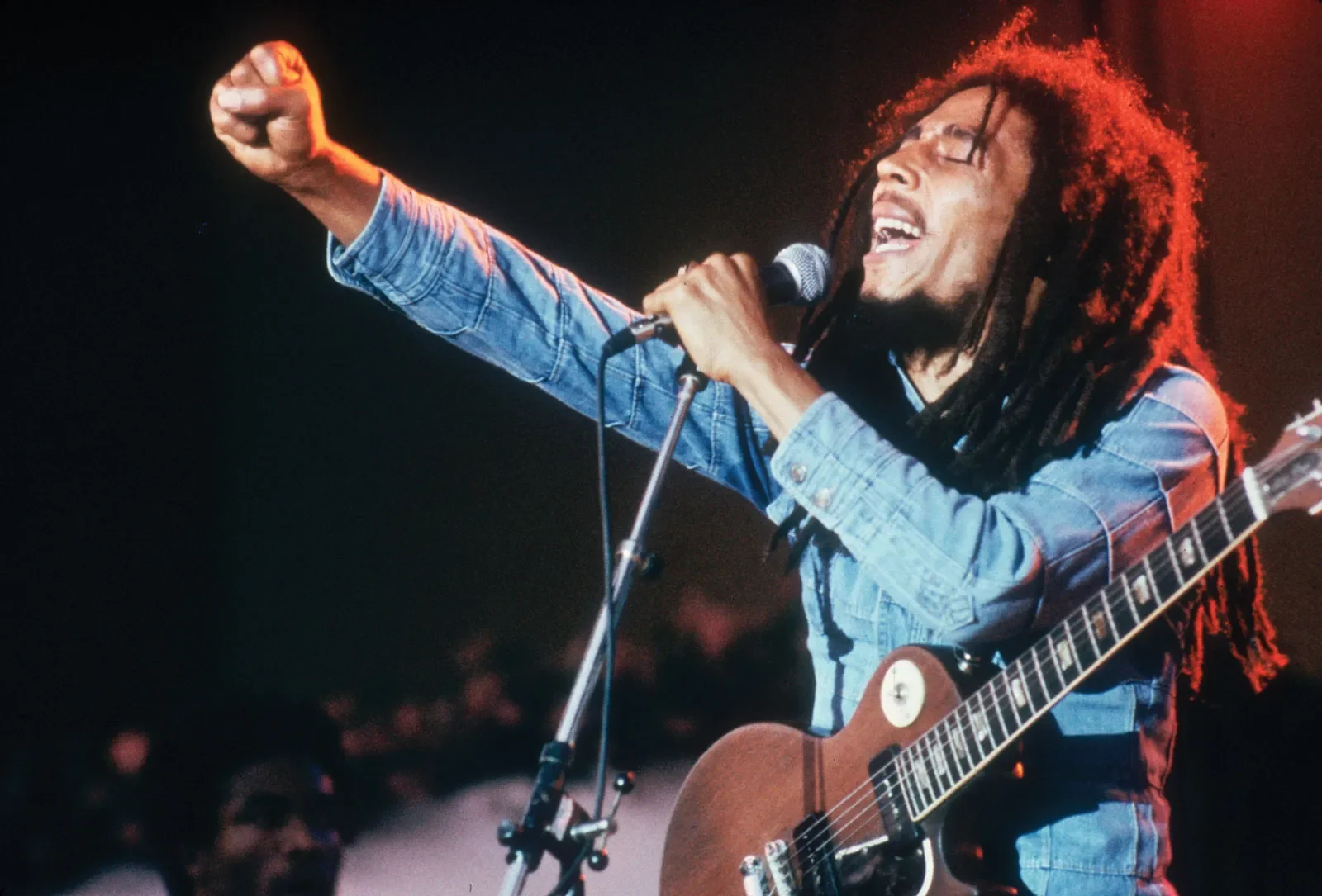
Bob Marley’s Rise In Music
Bob Marley’s rise in music began in the early 1960s in the streets of Trench town, Jamaica, which is often renowned as the birthplace of Raggae music. In his early music, he was influenced by American rhythm and blues along with local Jamaican styles like ska and reggae. He ultimately pioneered the genre of reggae, infusing it with elements of ska, rocksteady, and African rhythms. His captivating voice, coupled with his charismatic stage presence, captivated audiences worldwide. He formed the band The Wailers with Peter Tosh and Bunny Wailer, using their music to reflect the struggles and realities of Jamaica’s working-class communities. Although the group gained popularity locally, Marley initially faced financial challenges and limited international recognition. His breakthrough came in the 1970s when he signed with Island Records, a move that helped introduce reggae music to audiences around the world. In the process of cofounding (with a host of other Jamaican musicians) and popularizing reggae, Marley became more than just the Third World’s Wrst musical superstar—a feat that was of course noteworthy in and of itself. In the second half of the 1970s he became widely recognized as one of the region’s preeminent and most highly regarded musicians and spokepersons for change. Albums such as Catch a Fire and Rastaman Vibration established Marley as an international artist, and his powerful messages of peace, resistance, and unity played a major role in his rise as a global music icon.

Combating Injustice With Music
Music has long been a powerful force for challenging injustice, giving voice to the oppressed and uniting people across borders. Through rhythm, lyrics, and storytelling, artists can expose inequality, inspire resistance, and promote peace. From historic examples like the Me Too movement, BLM, the Civil Rights Movement, and many more, music has always acted as a beacon of hope and inspiration for the opressed. Bob Marley’s music stands as a lasting example of how creativity and rhythm can become a tool for social change and global awareness.
-
Through songs like “Get Up, Stand Up,” “Redemption Song,” and “War,” Marley consistently promoted themes of resistance and overcoming oppresion, urging people to challenge injustice and stand up for their rights. Like many famous activists, Marley did not call for violence, but instead a unified from of individuals that believed in change. There was a clear division amongst the Jamaican people, and Marley aimed to break down barriers for the betterment of society.
Ideas of liberation and personal empowerment were recurring themes throughout Marley’s work. He encouraged individuals to recognize their own worth, draw strength from within, and break free from both mental and physical forms of oppression. By doing so, his songs offered a sense of hope that made listeners believe change was possible.
-
Through powerful lyrics, Marley transformed music into a form of nonviolent protest. Songs like “Get Up, Stand Up” were incredibly direct, asking listeners to “stand up” for their rights, resisting oppression from those that seak to exploit Jamaicans. This song not only spoke to the people of Jamaica at this time, but it is ultimately a song that transcends eras, and it is applicable to any social movement looking to bring about change. This song, and many others, encourage others to reclaim their srenght and dignitiy, overcoming whatever stands in their way through their own merrit and ability.
-
In the second half of the 1970s he became widely recognized as one of the region’s preeminent and most highly regarded spokesperson. Writing on Marley as a postcolonial Wgure, with a particular focus on Africa and a hint of hyperbole, Eusi Kwayama puts this aspect of the reggae star’s status in perspective: “Bob Marley’s music has done more to popularise the real issues in the African liberation movement than several decades of backbreaking work by Pan-Africanists and international revolutionaries.” Through his music, the reggae artist represented Trenchtown as a global experience, translating Jamaican particularity into an internationally understandable, recognizable, and resonant discourse. Bob Marley will live on as one of the most influential musicians of all time.
Redemption Song
“Redemption Song” is one of Bob Marley’s most powerful and recognized works, transcending race and acting as a signal for hope and change amongst the Jamaican people. Marley wrote ‘Redemption Song’ after he had been diagnosed with the cancer, making this song even more powerful to its listeners. Its hollow, but hopeful nature finds Marley at his most vulnerable time, dealing with the reality of death head on and reinforcing his life purpose of creating songs that help spread the message of the oppressed. In his final efforts, Marley is still asking all believers to fight for their future.
“Life Is Stronger Than Death”
The quote “life is stronger than death” is from an interview with the famous singer, reflecting upon the current state of Jamaica during the 1970s and 1980s. During this time, Marley mentions that the country is at war, referring to the violence between JNP members and PNP members, but he tries to urge to the people and government that the War is won through life not death. It is clear that Bob Marley, who leads with a calm sense of love and hope, did not bring about change through a loud form of inspiration, but instead a kind, loving persona that transcended hate in their country.